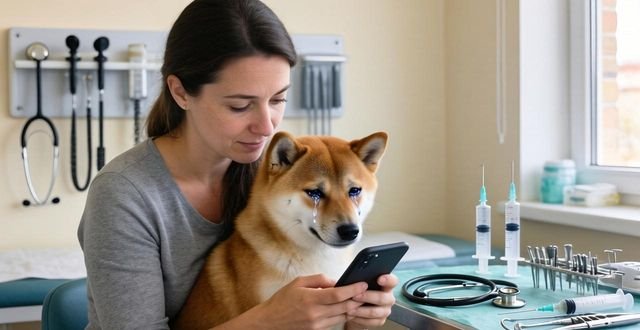
I still remember sitting in the parking lot outside the emergency vet. My phone showing a $7,800 estimate for an echocardiogram and a night in oxygen.
Moose—my 9-year-old rescue mutt—had been coughing for weeks. I thought it was allergies. The vet heard a murmur. Then came the words no pet parent wants: "Your dog has degenerative mitral valve disease."
For dogs, heart disease is often linked to leaky valves, especially in smaller breeds, and cats tend to get thickened heart muscle instead—like hypertrophic cardiomyopathy. But here's what no one tells you. It doesn't matter what flavor of heart disease your pets get. The bills all look the same.
I had pet insurance. I got it when Moose was a puppy. But I had never actually used the claims portal before. I didn't even know my login.
does pet insurance cover heart disease
Let me just say this. If your pet already has symptoms or a diagnosis before you sign up, most standard policies will call it pre-existing and won't touch it. Heart disease, cancer, kidney failure—those are the exact things you'll need coverage for, and they'll be excluded if you wait too long.
Some insurers will cover hereditary conditions like heart defects if they pop up after your policy starts. But the key is timing. Enroll when your pet is young and healthy, before anything shows up on their vet record.
Trupanion covers heart disease as long as it wasn't pre-existing. Same with Healthy Paws—they don't place restrictions on hereditary and congenital conditions, as long as signs first show up after enrollment. But every company is different. And you have to read the fine print.
I learned this the hard way last February when Moose had his first congestive heart failure event. He was struggling to breathe. His gums looked pale. I rushed him in at 11 PM.
The overnight stay alone cost $2,400. The cardiologist consult? Another $600. Medications—Pimobendan,Furosemide, some blood pressure pills—added up to about $150 a month. Then the bi-yearly echocardiograms at $600 each. By the end of the first year, I had spent nearly $14,000 out of pocket before insurance kicked in.
Which brings me to why I finally logged into that stupid portal.
pet insurance claims portal for heart treatment
I had been paying everything upfront and mailing paper claims like it was 1995. That's on me. But when the bills started stacking up, I realized I had to get smarter.
Most insurance companies have an online member center now. You can submit vet fees, track your cover, upload invoices, and see exactly what's been approved or denied—all in one place. I use mine constantly now. I scan the invoice from the cardiologist right at the front desk, upload it from my phone in the car, and usually see the claim status within a week.
Don't be like me. Set up your portal login the day you buy the policy. Save it in your password manager. You will need it.
is pet heart disease treatment worth the cost
Real talk. Heart disease can't be cured. It can only be managed. But management can buy years. Good years.
A friend of mine had a Cavalier King Charles Spaniel named Charlie. Cavaliers are basically genetically doomed when it comes to mitral valve disease. Charlie was diagnosed at age six. With medication, regular checkups, and a cardiologist monitoring him, he lived to be twelve. That's six extra years of couch snuggles and stolen sandwiches.
But it wasn't cheap. Charlie's monthly meds ran about $200. He had echocardiograms every eight months at $550 each. There was a scary weekend in the ICU that cost $8,000. Her insurance reimbursed 80 percent. She still paid thousands. But without insurance? She would have been looking at $60,000 over those six years.
I've seen GoFundMe pages for pets with heart disease raising $10,000, $15,000, even $60,000. A heart surgery for a puppy in Massachusetts was estimated at over $10,000. Another dog named Butch needed emergency procedures costing $8,000 just to get stable. These aren't hypothetical numbers. This is what people are paying right now.
what to look for in a pet insurance portal for heart conditions
I have opinions about this now. I didn't ask for them, but here we are.

First, make sure you can submit claims directly from your phone. You're going to be standing in a vet's office, stressed, holding a crying pet. You won't want to go home and find a printer. Upload functionality matters.
Second, check if the portal shows you your annual limits and remaining coverage. Heart disease is a chronic condition. You need to know how much reimbursement you have left before you hit the cap.
Third, look for a provider that covers congenital and hereditary conditions without requiring an expensive add-on. Some plans make you pay extra for this. Others—like ASPCA and Fetch—build it in.
pet heart disease insurance waiting periods matter
This almost got me. Most policies have a waiting period—usually 10 to 30 days—before coverage kicks in. If your pet shows symptoms or gets diagnosed during that window, it's considered pre-existing and will be excluded forever.
One woman I know adopted a senior cat. She bought insurance on a Tuesday. By Friday, the cat was breathing weird. The vet diagnosed hypertrophic cardiomyopathy. The claim was denied because she was still inside the 14-day waiting period.
She appealed. Twice. They said no both times. Now she pays $200 a month out of pocket for meds and bi-annual heart scans.
Don't let this be you. Buy insurance the day you bring your pet home. Not next week. Not after the first vet visit. Today.
managing pet heart disease with an insurance portal
Back to Moose.
After that first scary night in the ER, I finally logged into my portal. Reset my password twice. Uploaded seven invoices from the previous three months. Held my breath.
Two weeks later, I got a notification. Approved. Direct deposit hit my account three days after that. They covered 80 percent of everything after my $500 deductible. I almost cried in a Target parking lot.
Since then, I've used the portal about twenty times. I submit claims for his medication refills. For his checkups. For the time he had a random seizure that turned out to be unrelated to his heart but still cost $900 in tests.
The portal even lets me message the insurance team directly. When they denied a claim for a prescription food that the cardiologist specifically recommended, I sent a note from the vet explaining why it was medically necessary. They overturned the denial in four days.
does pet insurance save money for heart disease
I did the math recently. Over the past two years, I've paid about $4,200 in premiums plus deductibles. My insurance has reimbursed me roughly $17,000. That's a net savings of nearly $13,000.
But here's the part I didn't expect. The portal saved my sanity more than it saved my money.
Before I figured out the claims system, every vet visit felt like a financial crisis. I would lie awake at night doing mental math. What if he needs another echocardiogram? What if he goes into heart failure again? What if we need that surgery that costs $30,000 like Sadie the mixed-breed dog had?
Now I know: I submit the claim, they pay their share, I pay mine. That's it. The peace of mind is worth the monthly premium all by itself.
Moose turned eleven last month. He still has a heart murmur you can hear from across the room. He still takes seven pills a day. But he also still chases squirrels (slowly) and steals socks (quickly) and falls asleep with his head on my feet every single night.
His cardiologist says he's stable. We're managing.
And I'm never, ever going to let my pet insurance portal login expire again.