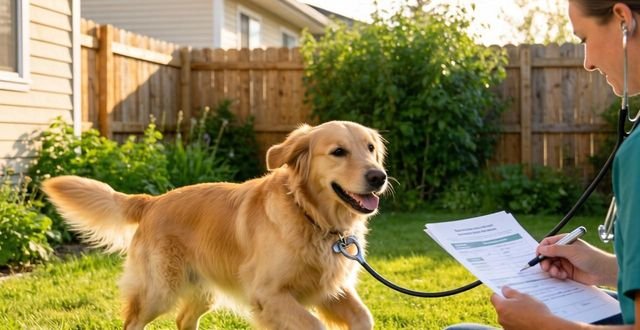
Look, I’m just gonna say it.
I used to think pet insurance was a scam.
Like, really. I’d roll my eyes every time someone mentioned it. “Just put money in a savings account,” I’d say. “You’re throwing cash away.”
Then my neighbor’s golden retriever ate a corn cob.
Sounds funny until you hear the surgery cost $4,200.
Why Alberta is different
I didn’t realize this until I moved to Canmore. But Alberta’s not like other places.
You know what happened last spring? A coyote jumped a six-foot fence and grabbed a small dog in broad daylight. In Calgary. Not the wilderness. Calgary.
And the wildlife thing? It’s not exaggerated. Alberta has the highest rate of wildlife attacks per capita in Canada. Like, more than every other province combined.
That’s not fear-mongering. That’s just true.
That one night at the emergency vet
My friend Sarah called me at 2 AM last winter. Crying. Her cat Leo got into something—she still doesn’t know what—but his kidneys were shutting down.
The emergency vet in Edmonton told her: five thousand dollars upfront or they couldn’t start treatment.
She didn’t have it.
She had to call her parents at 2 AM. Borrow money. Leo survived, thank god. But I saw her face that night.
Anyway.
That’s when I started looking into insurance for my own two idiots.
How much does this actually cost?
Okay so here’s the real numbers.
I pay $49 a month for my dog. That’s for accident and illness. My cat? $37.
My brother thinks I’m crazy. He says “that’s almost $90 a month for nothing.”
But I ran the math. My dog is three years old. If I never make a claim for ten years,that’s about $6,000 total paid.
One emergency surgery can cost $8,000.
You see the problem.
What nobody tells you about claims
Here’s something I learned the hard way. Or rather, my coworker learned it.
She got insurance for her puppy right away. Thought she was smart. Then the dog developed allergies at six months—and they denied the claim. “Pre-existing condition,” they said. At six months old.
I wanted to scream.
The thing is, you really have to read the fine print. Waiting periods. What counts as “pre-existing.” Some companies are way better than others. Trupanion pays vets directly at checkout. Fetch covers dental, which most don’t.
Do your homework. Seriously.
Spot, Fetch, Trupanion—which one?
I spent like three weeks obsessing over this.
Trupanion has no payout limit. That’s huge. But their monthly premiums are steeper. Fetch is comprehensive—they cover exam fees and specialist visits, which adds up fast. Spot has these flexible deductibles so you can tweak your monthly payment.
Someone online said to get quotes from all three with the exact same parameters. Same deductible, same reimbursement percentage (90% is the sweet spot).
That’s what I did.
The “I’ll just save money myself” trap
I used to believe this. Open a separate savings account. Put $50 in every month. Done.
But here’s the flaw.
My emergency fund only had $300 in it after eight months. Because life happens. I needed new tires. My kid needed braces. The basement flooded.
The money just . . . wasn’t there.
Insurance forces you to protect your pet even when you’re bad at saving. And I’m bad at saving.
Pre-existing conditions will get you

This is the biggest catch and most people don’t realize it until it’s too late.
If your dog has ever had a limp? That leg might not be covered later. Even if it was just a minor sprain. Even if it was years ago.
Some companies are stricter than others. Embrace covers some pre-existing conditions if your pet goes a certain period without symptoms. But most don’t.
Get insurance when your pet is young and healthy. Please. I’m begging you.
My own wake-up call
Last month my cat threw up.
Not unusual, she throws up sometimes. Cats are weird. But this time she kept doing it. Wouldn’t eat. Got really lethargic by day three.
I took her to the vet. X-rays, blood work, fluids, some medication. The bill was $670.
My insurance reimbursed 80% of it. So I paid about $135 out of pocket.
Six hundred seventy dollars vs a hundred thirty five.
I finally understood why people get insurance.
What Alberta vets actually cost
I asked my vet flat out. She said emergency visits here run $500 to $1,500 just for diagnostics. That’s before any treatment.
Breaking a leg? That’s $2,000 to $5,000 for surgery and follow-ups.
Something serious like cancer or bloat? You’re looking at eight to ten thousand dollars easily.
She also told me that about 1 in 3 pets will need emergency care at some point in their lives. That’s not rare. That’s basically a coin flip.
The “pet insurance portal Alberta” rabbit hole
When I started searching, I got overwhelmed. So many portals. So many comparison sites.
Honestly the best approach is just pick two or three companies directly. Get quotes. Ask them specifics—like “does this cover dental cleaning? What about acupuncture? Do you cover hereditary conditions?”
A portal can help, but don’t rely on one site. Their “top pick” is often just who paid them.
Things I wish I’d known earlier
If I could go back, here’s what I’d tell myself:
First, annual deductibles are better than per-incident deductibles. You meet it once per year, everything after is covered.
Second, 70% reimbursement sounds fine until you get a $3,000 bill. Then you’re paying $900 instead of $300 (if you had 90%). The extra monthly premium for 90% is usually pretty small.
Third, add wellness coverage if your pet is young. Vaccinations, checkups, flea prevention. It basically pays for itself.
The breed thing matters more than I thought
My friend has a French bulldog. Her insurance is twice what I pay for my mixed breed. Because Frenchies have breathing problems and back issues—basically a walking insurance claim.
Same with German shepherds and hip dysplasia. Golden retrievers and cancer.
If you have a high-risk breed, don’t even think about skipping insurance. You’ll regret it.
Coverage limits—watch out for these
Some policies have per-condition limits. Like they’ll only pay $2,000 for cancer treatment total. Which is nothing. Cancer treatment can cost $10,000 easy.
Unlimited or high annual limits are worth paying for.
And check if they cover alternative therapies. My friend’s dog needed hydrotherapy after knee surgery. Her insurance didn’t cover it. That was another $1,200.
Okay but do you actually need it?
Look, here’s where I landed.
If you have $15,000 sitting in an account that’s just for pet emergencies? Maybe you don’t need insurance. Maybe.
But most people don’t.
I don’t. I have a mortgage and two kids and my car just needed new brakes. The pet emergency fund would be the first thing I raid.
Insurance is like $50 a month. That’s one dinner out. That’s skipping takeout twice a week.
For that? I don’t have to worry. If my dog eats another sock. If my cat gets hit by a car. If either of them gets cancer.
I can just . . . take them to the vet. Without checking my bank account first.
That peace of mind is worth every penny.