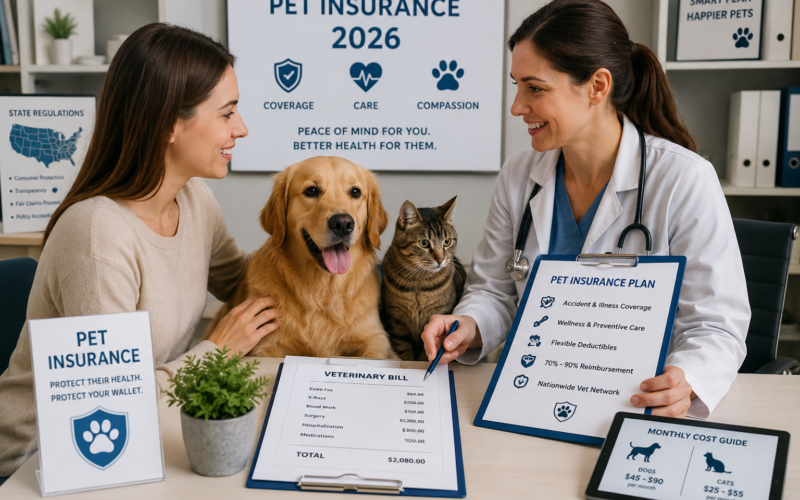
 Understanding Pet Insurance in 2026: Compare coverage options, monthly costs, reimbursement rates, and state regulations to protect your pet and manage rising veterinary expenses.[/caption]
Introduction
Pet ownership continues to grow across the United States, and so does the cost of veterinary care. From routine wellness exams to emergency surgeries, pet healthcare expenses have increased significantly over the past decade. As a result, more pet owners are turning to pet insurance as a way to manage unexpected veterinary bills.
In 2026, the pet insurance market is expected to reach new heights, driven by rising veterinary costs, expanded coverage options, and evolving state regulations. Understanding how pet insurance works, what it costs, and how regulations differ from state to state can help pet owners make informed decisions.
This comprehensive guide explains everything you need to know about pet insurance in 2026, including average costs, coverage options, state regulations, and tips for choosing the best policy.
What Is Pet Insurance?
Pet insurance is a health insurance policy designed specifically for pets. Similar to human health insurance, it helps cover medical expenses resulting from accidents, illnesses, injuries, and sometimes routine preventive care.
Most pet insurance plans operate on a reimbursement model:
- Visit any licensed veterinarian.
- Pay the bill upfront.
- Submit a claim to the insurance provider.
- Receive reimbursement based on your policy terms.
Coverage generally applies to dogs and cats, although some providers also insure birds, rabbits, reptiles, and other exotic pets.
Why Pet Insurance Is More Important Than Ever in 2026
Veterinary medicine has become increasingly advanced. Modern treatments include:
- MRI and CT scans
- Cancer therapies
- Orthopedic surgeries
- Cardiology treatments
- Advanced diagnostics
- Specialized emergency care
While these innovations improve pet health outcomes, they also increase treatment costs.
According to industry estimates, emergency surgeries can range from $2,000 to over $10,000, while cancer treatments may exceed $15,000. Pet insurance helps offset these expenses and provides financial peace of mind.
Additional factors driving pet insurance adoption include:
- Increased pet ownership
- Rising inflation
- Higher veterinary labor costs
- Expanded specialty care services
- Greater awareness of pet wellness
Average Pet Insurance Costs in 2026
Pet insurance premiums vary based on several factors:
- Pet species
- Breed
- Age
- Location
- Coverage level
- Deductible amount
- Reimbursement percentage
Dogs
Average monthly premiums for dogs in 2026:
| Coverage Type | Monthly Cost |
|---|---|
| Accident Only | $15-$30 |
| Accident & Illness | $45-$90 |
| Comprehensive Coverage | $70-$150 |
Cats
Average monthly premiums for cats:
| Coverage Type | Monthly Cost |
| Accident Only | $10-$20 |
| Accident & Illness | $25-$55 |
| Comprehensive Coverage | $40-$90 |
Exotic Pets
Insurance for exotic animals remains less common but is becoming more available.
Average monthly costs:
- Birds: $10-$35
- Rabbits: $15-$40
- Reptiles: $10-$30
Factors Affecting Pet Insurance Premiums
1. Pet Age
Older pets generally cost more to insure because they face a higher risk of illness and injury.
2. Breed
Certain breeds are prone to hereditary conditions.
Examples include:
- Bulldogs: respiratory issues
- German Shepherds: hip dysplasia
- Maine Coon Cats: heart disease
Higher-risk breeds often have higher premiums.
3. Geographic Location
Veterinary care costs vary by state and city.
Urban areas such as:
- New York City
- Los Angeles
- San Francisco
- Seattle
typically have higher insurance premiums than rural regions.
4. Coverage Level
More comprehensive policies naturally cost more but provide greater financial protection.
5. Deductible and Reimbursement Rate
Common reimbursement options:
- 70%
- 80%
- 90%
Higher reimbursement percentages generally increase monthly premiums.
Types of Pet Insurance Coverage
Accident-Only Coverage
This is the most affordable option.
Typically covers:
- Broken bones
- Bite wounds
- Poisoning
- Vehicle accidents
- Foreign object ingestion
Accident and Illness Coverage
The most popular option among pet owners.
Usually covers:
- Infections
- Cancer
- Arthritis
- Allergies
- Digestive disorders
- Chronic diseases
Wellness Add-Ons
Many insurers offer optional wellness plans covering:
- Vaccinations
- Annual exams
- Dental cleanings
- Flea and tick prevention
- Microchipping
These plans are often purchased as riders rather than standalone policies.
Common Exclusions
Most pet insurance policies do not cover:
- Pre-existing conditions
- Cosmetic procedures
- Breeding expenses
- Experimental treatments
- Grooming services
- Non-veterinary products
Always review policy exclusions carefully before purchasing coverage.
State Regulations Impacting Pet Insurance in 2026
Pet insurance regulations continue to evolve across the United States.
Several states have adopted updated consumer protection laws designed to increase transparency and improve policyholder understanding.
Enhanced Disclosure Requirements
Many states now require insurers to clearly disclose:
- Waiting periods
- Coverage exclusions
- Reimbursement formulas
- Premium adjustment methods
- Renewal conditions
This helps consumers compare policies more effectively.
Regulation of Pre-Existing Conditions
Some states are introducing stricter definitions regarding pre-existing conditions.
These rules aim to:
- Prevent misleading policy language
- Improve transparency
- Protect pet owners from unexpected claim denials
Consumer Protection Measures
Several states require insurance providers to:
- Maintain transparent claims processes
- Respond to claims within specified timelines
- Provide written explanations for denied claims
These measures enhance accountability throughout the pet insurance industry.
Digital Policy Accessibility
By 2026, many states encourage or require insurers to provide:
- Online policy documents
- Digital claims submissions
- Electronic policy updates
- Secure customer portals
This improves convenience and reduces administrative delays.
States with Strong Consumer Protections
States leading in pet insurance consumer protections include:
- California
- New York
- Washington
- Colorado
- Illinois
- Massachusetts
These states have implemented various transparency and disclosure requirements that help policyholders better understand coverage terms.
How to Choose the Best Pet Insurance Policy
Compare Coverage Carefully
Do not focus solely on price.
Consider:
- Coverage limits
- Exclusions
- Reimbursement rates
- Deductibles
- Waiting periods
Review Annual Limits
Some insurers offer:
- Annual caps
- Lifetime caps
- Unlimited coverage
Unlimited plans often provide the best protection for serious medical conditions.
Examine Waiting Periods
Common waiting periods include:
- Accidents: 1-14 days
- Illnesses: 14-30 days
- Orthopedic conditions: up to 12 months
Check Customer Reviews
Research claim satisfaction and customer support quality before selecting a provider.
Consider Long-Term Costs
Purchasing insurance while your pet is young may result in lower lifetime premiums and broader coverage eligibility.
Is Pet Insurance Worth It?
For many pet owners, the answer is yes.
Consider the following example:
A dog develops a torn ACL requiring surgery.
Without insurance:
- Surgery cost: $5,500
With insurance:
- Reimbursement rate: 80%
- Owner responsibility: approximately $1,100 plus deductible
The savings can be substantial.
Insurance also helps pet owners make treatment decisions based on medical needs rather than financial constraints.
Future Trends in Pet Insurance
Several trends are shaping the pet insurance industry in 2026:
AI-Powered Claims Processing
Artificial intelligence is helping insurers process claims faster and reduce paperwork.
Personalized Premiums
Advanced analytics allow insurers to better assess risk and tailor premiums.
Telehealth Integration
Many policies now include virtual veterinary consultations.
Expanded Coverage
More insurers are beginning to cover:
- Behavioral therapy
- Alternative treatments
- Rehabilitation services
- Prescription diets
Conclusion
Pet insurance has become an essential financial tool for modern pet owners. As veterinary costs continue to rise in 2026, insurance can provide valuable protection against unexpected medical expenses while ensuring pets receive timely care.
When evaluating pet insurance, it is important to compare coverage options, understand exclusions, review reimbursement structures, and stay informed about state-specific regulations. By choosing the right policy, pet owners can enjoy greater peace of mind and focus on what matters most—the health and well-being of their beloved companions.