
Introduction: I Thought Pet Insurance Would Protect Me — I Was Wrong at First
I used to believe pet insurance was simple.
You pay a monthly premium.
Your pet gets sick.
The insurance company helps you pay the vet bills.
That was the fantasy.
The reality? Confusing policies, denied claims, rising premiums, and a lot of emotional stress I was not prepared for. I didn’t just learn about pet insurance — I paid for that education, both financially and mentally.
This article is not theory. It’s not written from a broker’s desk or a comparison website chasing commissions. This is my personal experience navigating pet insurance in the U.S. as a real pet owner in 2026 — including mistakes, regrets, emotional breakdowns, and eventually, hard-earned clarity.
If you’re researching pet insurance right now, I want to save you from the same traps I fell into.
The First Shock: High Vet Bills Are the Real Trigger
Keyword Focus: Best pet insurance plans for high vet bills
My breaking point came on a random Tuesday.
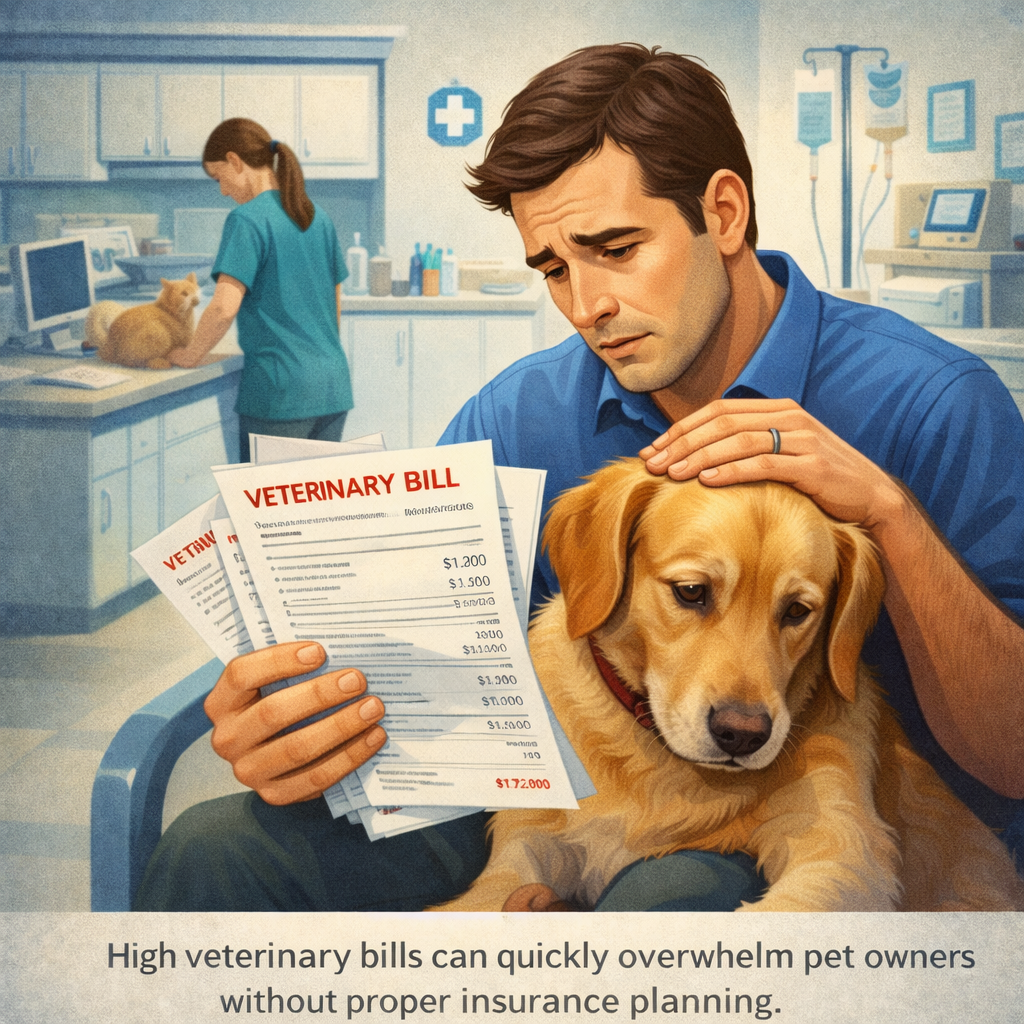
My dog Max suddenly refused to walk. Within hours, I was sitting in a veterinary clinic holding an estimate that started with a $3,800 surgery quote — and that was just the beginning.
I remember thinking:
“It’s okay. I have pet insurance.”
That confidence lasted about 10 minutes.
The receptionist explained that I needed to pay everything upfront, submit a claim later, and hope the insurance company reimbursed me correctly. No instant relief. No direct billing. Just anxiety.
That moment taught me a painful truth:
Pet insurance doesn’t reduce vet bills — it reimburses them later.
If you don’t choose the right plan, high vet bills can still wreck your cash flow.
I Underestimated the Cost of “Affordable” Coverage
Keyword Focus: Affordable pet insurance for senior dogs and cats
When Max turned seven, everything changed.
Premiums went up.
Coverage got tighter.
Exclusions multiplied.
I shopped around, thinking I could find something “more affordable.” What I found instead were plans that looked cheap on the surface but quietly removed coverage for the exact conditions older pets are most likely to face.
Emotionally, this was brutal.
I wasn’t just comparing numbers — I felt like I was putting a price tag on my pet’s life. Choosing between affordability and protection felt morally wrong, even though it was financially unavoidable.
Many U.S. pet owners experience the same guilt, especially with senior pets. “Affordable” often means less useful, and that’s something marketing rarely admits.
The Fine Print That Hurt the Most: Hereditary Conditions
Keyword Focus: Pet insurance coverage for hereditary conditions
Here’s a mistake I deeply regret:
I didn’t fully understand how hereditary and breed-related conditions were treated.
Max developed joint issues — something common for his breed. The vet confirmed it was manageable but likely genetic. When I filed the claim, the response came back fast:
Denied. Hereditary condition exclusion applies.
I felt betrayed — not just by the insurer, but by myself. I thought I had read the policy. I hadn’t read it deeply enough.
This is where many pet owners get burned:
-
Policies advertise “comprehensive coverage”
-
Exclusions hide in technical language
-
Hereditary ≠ rare, but insurers treat it like an exception
Reimbursement in 2026: Better, But Still Stressful
Keyword Focus: How pet insurance reimbursement works in 2026
To be fair, reimbursement systems have improved compared to a few years ago.
Apps are faster.
Claims are digital.
Processing times are shorter.
But the emotional burden hasn’t changed.
Waiting 2–6 weeks for reimbursement after paying thousands upfront creates a constant low-level stress. During emergencies, that delay matters. I found myself checking claim statuses obsessively, refreshing apps like I was tracking a stock portfolio.
Pet insurance in 2026 is more efficient — but it still assumes you have liquidity, not just coverage.
I Learned the Hard Way That Location Matters
Keyword Focus: Pet insurance cost comparison by state
When I moved states, my premium changed — without my pet changing at all.
Same dog.
Same age.
Same health history.
Different ZIP code.
State-level regulations, vet cost averages, and insurer pricing models all affect premiums. This was shocking to me. I had assumed insurance was mostly national. It isn’t.
Many U.S. pet owners don’t realize they’re overpaying simply because they never re-quote after moving.
Pre-Existing Conditions: The Most Frustrating Wall
Keyword Focus: Pre-existing condition pet insurance solutions
Nothing is more demoralizing than hearing:
“That condition is pre-existing.”
It feels final. Like a door slammed shut.
Max’s joint issue followed him like a shadow across every quote. Most insurers wouldn’t touch it. A few offered partial solutions after long waiting periods — but only if symptoms disappeared completely for months.
This taught me an important mindset shift:
Pet insurance works best when purchased early — before reality happens.
Late optimization is always more painful.
Deductibles: Where I Finally Got Smarter
Keyword Focus: Pet insurance deductible and reimbursement strategies
At first, I chose the lowest deductible possible. I thought that meant “better protection.”
Wrong.
Low deductibles = high premiums
High deductibles = lower monthly stress, higher emergency risk
Once I mapped my real usage, the answer became clear.
My Realization (Simplified Table)
| Strategy | Monthly Cost | Emergency Impact | Long-Term Value |
|---|---|---|---|
| Low deductible | High | Low | Poor |
| Medium deductible | Balanced | Manageable | Good |
| High deductible | Low | High | Situational |
I switched to a medium deductible + higher reimbursement percentage, and my overall satisfaction improved dramatically.
Claim Denials Almost Made Me Quit
Keyword Focus: Pet insurance claims denials reasons and fixes
I’ve had claims denied for:
-
Missing vet notes
-
Ambiguous diagnosis wording
-
Timing technicalities
At one point, I almost canceled everything out of frustration.
What changed?
I stopped being passive.
I learned to:
-
Request detailed medical records
-
Ask vets to clarify language
-
Appeal politely but persistently
-
Document everything
Denied claims aren’t always final — but only if you fight intelligently.
What U.S. Pet Owners Consistently Struggle With (Nationwide Patterns)
From forums, communities, and expert summaries, the same issues repeat across the country:
-
Confusing exclusions
-
Rising premiums over time
-
False assumptions about “full coverage”
-
Emotional stress during emergencies
-
Poor understanding of reimbursement mechanics
The most successful pet insurance users share one trait:
They treat insurance like a system, not a promise.
What I’d Do Differently If I Started Today
If I could reset everything, here’s my corrected strategy:
✔ Buy early, even if coverage feels unnecessary
✔ Prioritize reimbursement percentage over marketing perks
✔ Accept that some things won’t be covered
✔ Re-shop plans every year
✔ Budget emotionally, not just financially
Pet insurance didn’t become “perfect” — but my experience became manageable once I understood how the system really works.
Final Thoughts: This Is Not About Insurance — It’s About Control
Pet insurance in 2026 is not a scam — but it’s also not a safety net unless you learn how to use it.
I was naïve. I trusted ads. I ignored fine print. I assumed fairness.
Now, I’m informed. Calmer. More realistic.
And most importantly — my pet is still protected, on my terms.
If my experience saves you from even one denial, one bad plan, or one sleepless night at the vet — then every mistake I made was worth writing about.