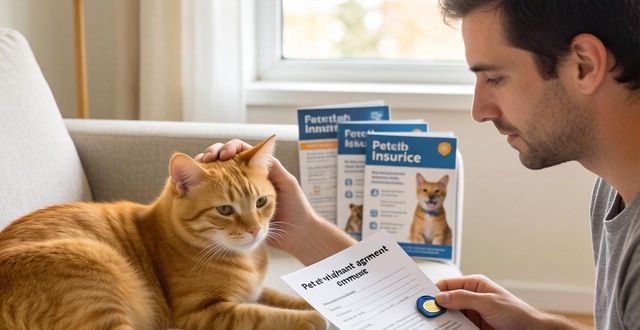
So last week, my orange tabby, Mango, did the thing indoor cats do. He disappeared.
The screen door? Yeah, I didn’t latch it properly. Classic human error.
I ran outside in my slippers, yelling his name like a crazy person.
You know that feeling in your throat when you can’t find them?
Here’s the thing that saved my sanity that night.
I’d signed him up for this Pet Insurance Portal thing back when he got microchipped. Honestly, I only did it because the vet tech was really persuasive and I felt guilty saying no. I just wanted to get him back in his carrier and go home.
But that portal linked everything. His chip number, my contact info, his insurance ID.
And literally two hours after Mango vanished, I got a notification on my phone.
Someone had found him hiding under their porch. They took him to a 24-hour emergency vet, they scanned his microchip, and because I had that portal set up, the system flagged his insurance profile instantly. I didn’t have to dig through old emails or call the microchip company at 11pm to update anything.
The vet called me directly within fifteen minutes.
My hands were shaking so bad I could barely hold the phone.
I always thought microchips were just… a thing you do. You know, like when you adopt a pet,they poke the needle in, you fill out a form, and you’re done.
But here’s what nobody tells you.
That “registration” step? That’s on you. The vet doesn’t do it for you automatically. If I hadn’t gone through an online portal that connected the chip to an active insurance record, that happy ending probably wouldn’t have happened.
The shelter would have scanned him, sure. But without up-to-date contact info linked to a verified policy, they might have just listed him as a stray. And you know how full shelters get these days.
So yeah. That portal did more than just save me paperwork. It saved me from a week of crying and making missing cat flyers at 3am.
Microchipping by itself is a little overrated if you stop there.
Wait, hear me out.
The chip is just a number. A rice-sized piece of tech sitting under your dog or cat’s skin. It doesn’t have GPS, it doesn’t send you a text when your pet wanders off. All it does is sit there, silently holding an ID number, waiting for someone to scan it.
And that scanner? Usually only vets and shelters have them.
So if a random neighbor finds your pet and just thinks “oh, cute loose dog,” and doesn’t take them to get scanned? That’s it. Game over.
But when your chip registration is hooked into a pet insurance platform, something changes.
It’s not just a number anymore. It becomes a flag in a bigger safety net. Emergency vets can pull up your policy immediately, check your coverage, even start treatment without you there in person.
That matters when you’re stuck at work or driving back from vacation.
I’ve been seeing ads for Spot and Pets Best and all these portals that promise “5% off” if your pet is microchipped. Used to think that was just a marketing gimmick.
Nope. It’s real.
When I renewed Mango’s policy through the portal after his chip was registered, I got a discount. Not huge — like 5% or 10% — but on a yearly premium that adds up to like $600? That’s real money. I bought a new cat tree with the savings.
And the best part? Most of these portals let you update your address or phone number online in like two minutes. Because moving? That’s the #1 reason microchips fail. Old phone number on file, chip becomes useless.
So every time you move, you should be logging into your pet insurance portal anyway just to update your mailing address for claim checks. Might as well update the microchip registration at the same time.

Okay real talk. Does insurance actually cover the microchipping procedure itself?
Depends on your policy.
Most accident-only plans don’t cover it. They consider it “routine preventative care,” like a wellness check or a vaccine. But if you’ve got a comprehensive plan with a wellness add-on? Then yeah. You can often get reimbursed for the implant fee.
I paid about $45 for Mango’s chip at the local vet clinic. Submitted the receipt through my online portal, attached the microchip number they gave me, and got $40 back in like a week.
That’s what I mean when I say a portal changes the game. Without that portal, I would’ve lost the receipt, forgotten to submit the claim, and just eaten the cost.
But the system sent me a reminder email two days after his vet visit. “Hey, did you want to file a claim for this?”
Yes please.
One thing I didn’t expect.
When you link your pet’s microchip to an insurance portal, you can get real-time alerts if someone scans it. Like push notifications to your phone. “Your pet’s microchip was scanned at [location].”
This isn’t GPS tracking. It doesn’t tell you where your pet is moving in real time. But if a Good Samaritan finds Mango and takes him to a clinic to be scanned while I’m at work? Boom, I get an alert. The vet has my number. They know he’s insured. They can start the intake process before I even arrive.
That’s the kind of peace of mind you can’t put a price on.
Okay fine, you can. It’s like an extra $3-5/month on my premium. But worth every penny.
I’m not gonna lie to you and say setting this all up was seamless.
Because portals can be annoying. Some of them have clunky interfaces, buttons that don’t work right on mobile, and customer service wait times that make you want to scream.
But here’s my advice, from someone who’s been through the disaster and lived to tell the story.
First, register your pet’s microchip the same day you get it implanted. Don’t wait. Don’t put the card in a drawer “for later.” Do it in the parking lot of the vet clinic before you even start the car.
Second, when you buy pet insurance, use a portal that explicitly asks for the microchip number on the application. Some portals just skip this. You want the one that doesn’t. Because that’s how they link everything together.
Third, check your contact info every six months. Put a reminder on your calendar. “Check microchip and insurance portal.” Your phone number changes, you move apartments, you get a new email — all of that breaks the chain.
And a broken chain means your lost pet stays lost even if someone scans them.
I remember standing in the vet’s office after they called me about Mango.
He was there, curled up in a blanket on the exam table, looking at me like “what’s the big deal, I was just exploring.”
The vet handed me a printout. It had his microchip number, my policy details, and the claim form they’d already started filling out for the stress check they did on him.
Everything was right there. In one place. Because I’d signed up for that portal when I got him chipped.
If I hadn’t done that dumb little paperwork back then? I don’t even want to think about it.
Microchipping your pet is step one. Registering that chip is step two. Linking it to an insurance portal that works 24/7?
That’s the real safety net. The one that actually catches your pet when they fall through the cracks.
So if your dog or cat is chipped right now, but you never signed into the portal? Go do it. Today. Before you forget.
Because the next time that screen door gets left open, you’re gonna want that notification on your phone.
Trust me on this one. I learned the hard way.