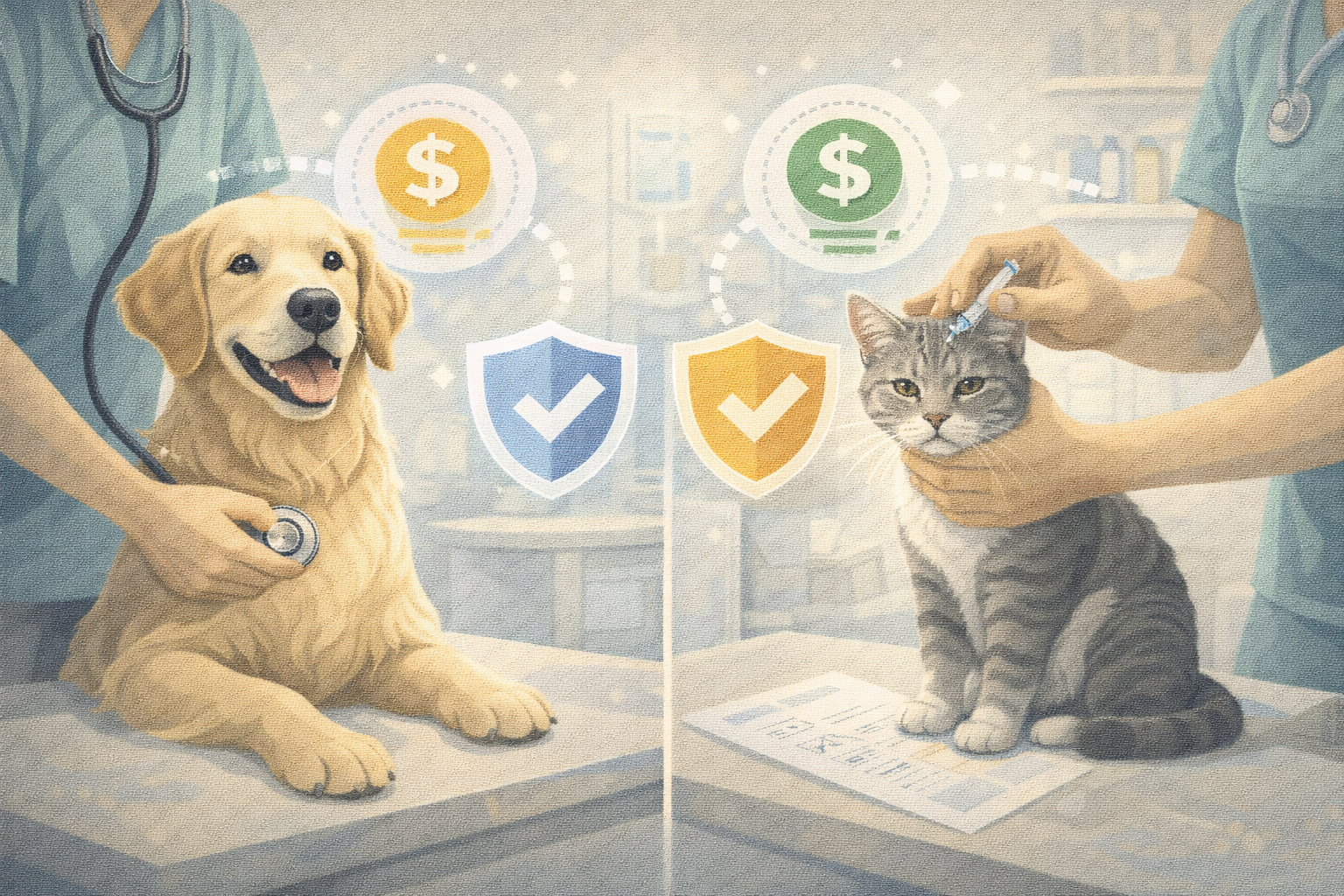
 Pet insurance costs differ between dogs and cats based on several factors[/caption]
Introduction: Why Cost Differences Matter for Pet Owners
For American households considering pet insurance, one of the most common and practical questions is: how much does pet insurance cost for dogs and cats? In 2026, as veterinary medicine advances and treatment expenses continue to rise, understanding cost differences between dogs and cats is essential for responsible pet ownership.
Although both dogs and cats fall under the broader category of pet insurance, insurers price them differently due to variations in medical risk, treatment costs, and claim frequency. This article provides a detailed comparison of dog and cat insurance costs in the United States, explaining why premiums differ, what factors influence pricing, and how pet owners can choose cost-effective coverage.
Overview of Pet Insurance Pricing by Pet Type
Pet insurance premiums are not uniform across species. Dogs generally cost more to insure than cats, regardless of location or provider. This pricing gap reflects real-world veterinary data and long-term claims experience.
In 2026, national averages typically fall within these ranges:
-
Dog insurance: $40–$70 per month
-
Cat insurance: $20–$35 per month
While these are averages, individual premiums may be significantly higher or lower depending on pet-specific and policy-related factors.
Why Dog Insurance Costs More Than Cat Insurance
Several structural reasons explain why dog insurance premiums exceed those for cats.
1. Higher Veterinary Treatment Costs
Dogs are generally larger than cats, which increases:
-
Medication dosages
-
Anesthesia requirements
-
Surgical complexity
As a result, veterinary bills for dogs tend to be higher, leading to higher pet insurance claim payouts.
2. Greater Accident Risk
Dogs are more likely to experience accidents due to outdoor activity, social behavior, and interaction with other animals. Injuries such as fractures, bite wounds, and ligament tears are more common among dogs.
3. Breed-Specific Health Conditions
Many dog breeds are predisposed to hereditary conditions such as hip dysplasia, heart disease, or respiratory issues. These conditions increase claim frequency and long-term costs for insurers.
Average Cost of Pet Insurance for Dogs in 2026
In 2026, the average cost of dog insurance in the United States typically ranges between $480 and $840 per year for comprehensive accident-and-illness coverage.
Key cost drivers include:
-
Breed size and genetics
-
Age at enrollment
-
Geographic location
-
Coverage limits and reimbursement rates
Large breeds and senior dogs generally fall at the higher end of this range.
Average Cost of Pet Insurance for Cats in 2026
Cat insurance remains more affordable, with average annual premiums ranging from $240 to $420.
Cats tend to have:
-
Lower accident rates
-
Fewer high-cost surgeries
-
Lower medication and hospitalization costs
However, chronic conditions such as kidney disease, diabetes, or dental illness can still result in significant long-term expenses.
How Age Affects Pet Insurance Costs for Dogs and Cats
Age is a major pricing factor for both dogs and cats.
Puppies and Kittens
-
Lowest premiums
-
Fewer pre-existing conditions
-
Best time to enroll
Adult Pets
-
Moderate premium increases
-
Greater likelihood of illness claims
Senior Pets
-
Highest premiums
-
More exclusions
-
Limited plan availability
Early enrollment helps pet owners lock in lower costs and broader coverage.
Breed and Genetic Risk Considerations
Breed significantly affects pet insurance pricing, particularly for dogs.
High-Risk Dog Breeds
-
Large and giant breeds
-
Brachycephalic breeds
-
Working and sporting breeds
Cat Breeds With Higher Costs
-
Maine Coon
-
Bengal
-
Persian
Mixed-breed pets often have lower premiums due to reduced genetic risk.
Coverage Level and Cost Differences
The type of coverage selected plays a crucial role in determining cost.
Accident-Only Plans
-
Lower premiums
-
Limited protection
-
Suitable for low-risk pets
Accident and Illness Plans
-
Most popular option
-
Balanced cost and coverage
Comprehensive Plans With Wellness Add-Ons
-
Highest premiums
-
Includes preventive care
Pet owners should evaluate whether additional coverage justifies the higher cost.
Geographic Variation in Dog and Cat Insurance Costs
Although this article focuses on pet type, location still influences pricing. For example:
-
Dog insurance in high-cost states may exceed national averages by 20–40%.
-
Cat insurance in low-cost states may be significantly cheaper.
Understanding how location and pet type interact is essential for accurate cost planning.
How to Reduce Pet Insurance Costs for Dogs and Cats
Pet owners can manage pet insurance costs through strategic choices:
-
Enroll pets at a young age
-
Choose higher deductibles
-
Select appropriate reimbursement levels
-
Avoid unnecessary add-ons
-
Compare multiple insurers
Cost savings should never come at the expense of essential coverage.
Is Pet Insurance Worth the Cost for Dogs and Cats?
From a cost–benefit perspective, pet insurance often provides greater value for dog owners due to higher risk and treatment costs. However, cat insurance can still offer substantial protection against chronic illnesses and emergency care.
For both dogs and cats, pet insurance helps convert unpredictable veterinary expenses into manageable monthly payments.
Common Mistakes When Comparing Dog and Cat Insurance Costs
Pet owners often make several errors:
-
Comparing premiums without coverage details
-
Ignoring long-term cost implications
-
Overlooking breed-specific exclusions
-
Assuming cat insurance is unnecessary
Avoiding these mistakes improves both affordability and protection.
Conclusion: Choosing Cost-Effective Pet Insurance by Pet Type
In 2026, understanding how much pet insurance costs for dogs and cats is a foundational step in responsible pet ownership. While dog insurance is generally more expensive, it often delivers higher financial value. Cat insurance, though more affordable, plays a critical role in managing chronic and unexpected medical expenses.
By evaluating pet insurance costs through the lens of pet type, age, breed, coverage level, and location, pet owners can select policies that balance affordability with meaningful protection. The right pet insurance plan is not simply the cheapest option—it is the one that aligns with a pet’s real-world health risks and a household’s financial priorities.
Related Articles